Short answer
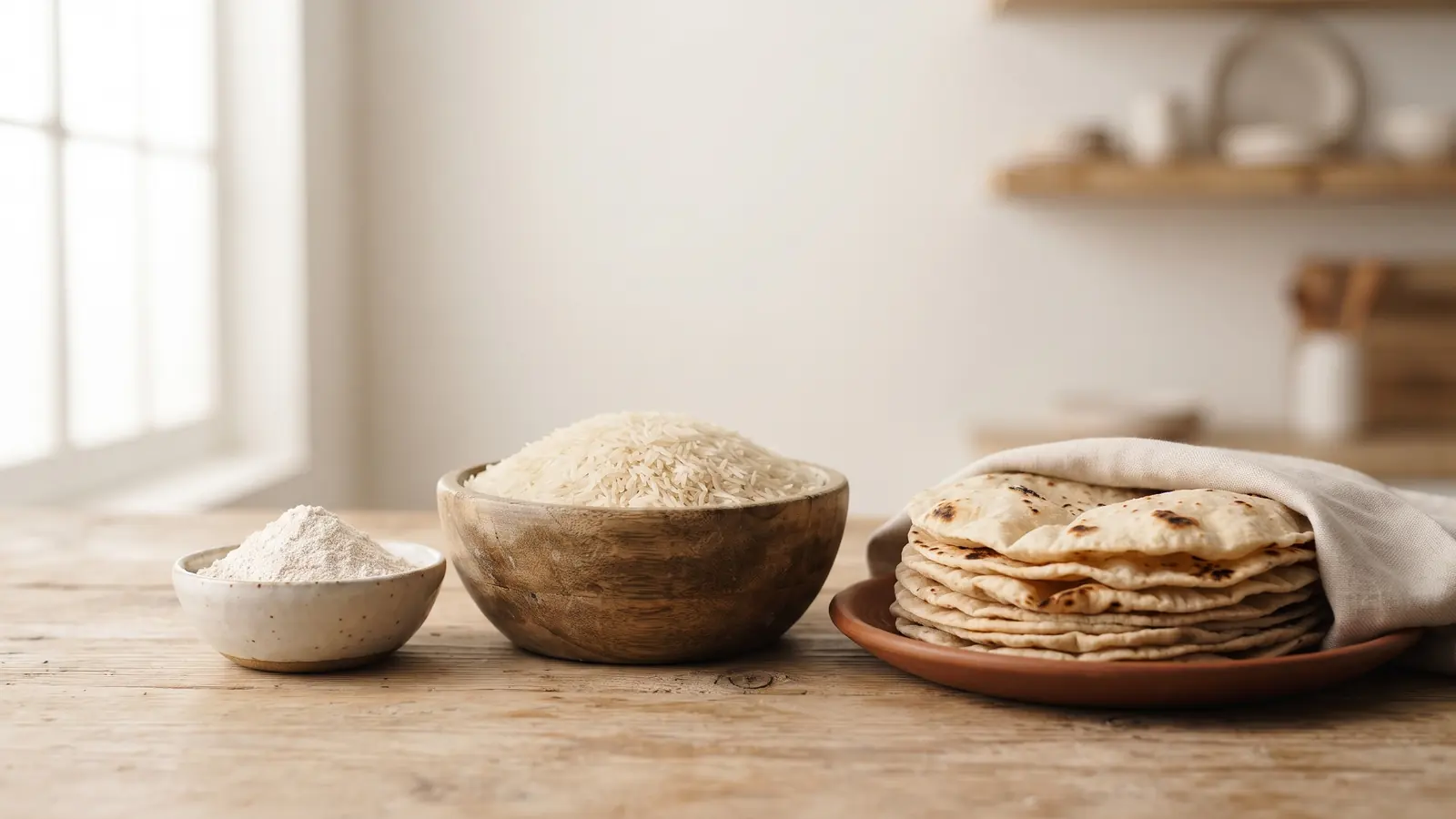
Atta flour is a finely milled wholewheat flour from South Asia, made from the whole wheat grain and used for rotis, chapatis, parathas and puris. It differs from British wholemeal flour in how finely it is milled and how it behaves when kneaded with water.
Atta flour is a finely milled wholewheat flour used across India, Pakistan and Bangladesh to make rotis, chapatis, parathas and puris. Atta flour keeps the bran and germ of the wheat grain, so it is darker than plain flour, and it makes a soft, pliable dough when mixed with warm water and rested.
What is atta flour?
Atta flour is wholewheat flour milled very fine, traditionally ground between stone wheels called chakki, which is why some bags say “chakki atta”. The whole grain goes in, so the bran, germ and endosperm are all present, but the particles are much finer than in many British wholemeal flours.
The word atta (also written aata or ata) is used in Hindi, Urdu, Punjabi and several other South Asian languages for wheat flour. In English recipes you will also see “chapati flour”, “roti flour” or “Indian wholewheat flour”. These labels are used loosely, so the ingredients list is the safest guide.
How is atta different from wholemeal and plain flour?
Atta is finer than most wholemeal flour and absorbs more water than plain white flour, which is why it makes a soft dough that rolls thin. Plain flour has the bran and germ removed, while wholemeal flour keeps them but is often more coarsely ground.
| Flour | Made from | Texture | Best for |
|---|---|---|---|
| Atta | Whole wheat, milled very fine | Soft, powdery | Roti, chapati, paratha, puri |
| Wholemeal flour | Whole wheat, often coarser | Slightly gritty | Bread, scones, general baking |
| Plain white flour | Wheat with bran and germ removed | Very fine, pale | Cakes, sauces, pastry |
| Strong white bread flour | White wheat with more protein | Fine, elastic dough | Bread, pizza dough |
The fine milling is the point. Large flecks of bran would tear a thin roti, while the very fine atta stretches and puffs. The other point is how the dough feels: atta dough is soft and slightly springy, not stretchy like bread dough.
What can you make with atta flour?
Atta flour is the standard flour for everyday North Indian and Pakistani flatbreads. The same bag of atta covers several breads, which differ mainly in how they are rolled and cooked.
- Roti and chapati: thin, unleavened rounds cooked on a flat griddle called a tawa.
- Phulka: a small, thin roti puffed over a direct flame.
- Paratha: layered or stuffed flatbread cooked with ghee or oil.
- Puri: small rounds deep-fried so they puff into hollow balls.
- Thepla and missi roti: flavoured flatbreads, often with spices or a little extra flour such as besan.
Other flours are also used for some breads. Naan, for example, is normally made from white flour with yoghurt and a raising agent, so atta is not the usual choice for it.
How do you make a basic atta dough?
A basic atta dough is just atta, water and optionally a pinch of salt, kneaded until soft and left to rest. The usual ratio is roughly two parts atta to one part water by volume, adjusted until the dough is soft but not sticky.
- Put 250 g of atta in a wide bowl with a pinch of salt, if you like.
- Add about 120 to 140 ml of lukewarm water gradually, mixing with your hand.
- Knead for 6 to 8 minutes until the dough is smooth and springs back slowly.
- Rub a few drops of oil on the surface, cover and rest for 20 to 30 minutes.
- Divide into small balls, roll each one thin on a floured surface and cook on a hot tawa.
The exact water amount depends on the brand and the weather, so add water slowly. Dough that cracks at the edges when rolled is too dry. Dough that sticks to your fingers is too wet and needs a dusting of atta.
How do you keep rotis soft?
Rotis stay soft when the dough is well rested, the rolling is even, and the finished breads are stacked and covered while still warm. Steam trapped in a lidded container or a clean cloth stops them drying out.
- Rest the dough so the gluten relaxes and rolling is easier.
- Roll evenly, without thick centres or very thin edges.
- Cook on a properly hot tawa, so each side takes only a minute or so.
- Brush with a little ghee or butter if you like, then wrap in a clean towel or a lidded pot.
If the rotis turn hard, the usual causes are a dry dough, a tawa that is not hot enough, or leaving them uncovered.
Does atta flour contain gluten?
Yes, atta flour is made from wheat, so it contains gluten. This matters for anyone who avoids gluten for any reason, and no wheat flour is a safe swap. If you need a gluten-free flatbread, look at flours made from other grains and follow the label.
Atta is not the same as besan, which is made from chickpeas, or rice flour. Some roti recipes use those flours, but they make a different dough with a different texture. For allergy or dietary questions, read the pack and ask the shop rather than relying on a general guide.
How should you store atta flour?
Store atta flour in a sealed container in a cool, dry place away from heat and moisture. Because wholewheat flour contains the germ, which holds natural oils, it does not keep as long as white flour and can turn stale or smell flat after a long time.
| Storage method | What to know |
|---|---|
| Original bag, folded and clipped | Fine for a few weeks, but not airtight |
| Sealed tub or jar in a cool cupboard | Best for everyday use |
| Fridge or freezer in a sealed bag | Useful for a large bag or a warm kitchen, return to room temperature before use |
Check the best-before date on the bag, and sniff the flour before use. A musty or sour smell means it should be thrown away. Keep it dry, since damp encourages mould and lumps.
What should you look for when buying atta?
When buying atta, check the label for “wholewheat” or “100% whole wheat”, look at the ingredients list, and choose a bag size that suits how often you bake. A small household may prefer a smaller bag that stays fresh, while larger families often buy bigger sacks.
- Ingredients: wheat only, or wholewheat flour. Some products blend in other flours.
- Milling description: words such as “chakki” or “stone ground” describe the style, not a regulated grade.
- Size: cash and carry shops often sell larger bags than a supermarket does, so be sure you can store it.
- Dates: look at the best-before date and avoid torn or damp bags.
Does Falcon Cash & Carry sell atta flour?
Reviewers of Falcon Cash & Carry on Google Maps mention flour (atta) among the rice and dals on its shelves, as recorded on 14 November 2026. The store is an Indian grocery cash and carry at 82A Syston Street West, Leicester LE1 2JU.
No full product list is published, so brands, bag sizes and stock are unknown, and nothing in the sources gives prices. This guide is independent and does not take orders. The menu page lists the product types the sources name, and the hours and location page gives the address and times from Google Maps. Call the shop on 0116 251 5858 before a special trip.
Common questions
Can I use atta flour in cakes or bread?
You can, but the result is denser and more wheaty than with plain or strong white flour. Atta suits flatbreads best. For bread, blend it with strong white flour, and for cakes, use it only as a partial swap.
Why is my atta dough tough?
Usually the dough is too dry, was not rested, or was kneaded with too little water. Add water a spoonful at a time until the dough is soft, then cover it and rest it for 20 to 30 minutes.
How do I stop atta flour going stale?
Keep it in a sealed container in a cool, dry cupboard, away from the cooker. Because it contains the bran and germ, it keeps for a shorter time than white flour. Buy sizes you will use within a few months.
Is atta the same as chapati flour?
In most shops the two names point to the same kind of product: finely milled wholewheat flour for flatbreads. Some bags are labelled chapati flour, others atta, and a few mix in a proportion of white flour.
What does the wording on an atta bag mean?
Words such as chakki or stone ground describe the milling style rather than a regulated grade. If the label is unclear, check the ingredients list and any milling description on the pack.
Before you go, check the Falcon Cash and Carry guide for the current hours and the menu.
This article is general information from an independent guide, not from Falcon Cash & Carry itself. For the store’s current details see hours and location.