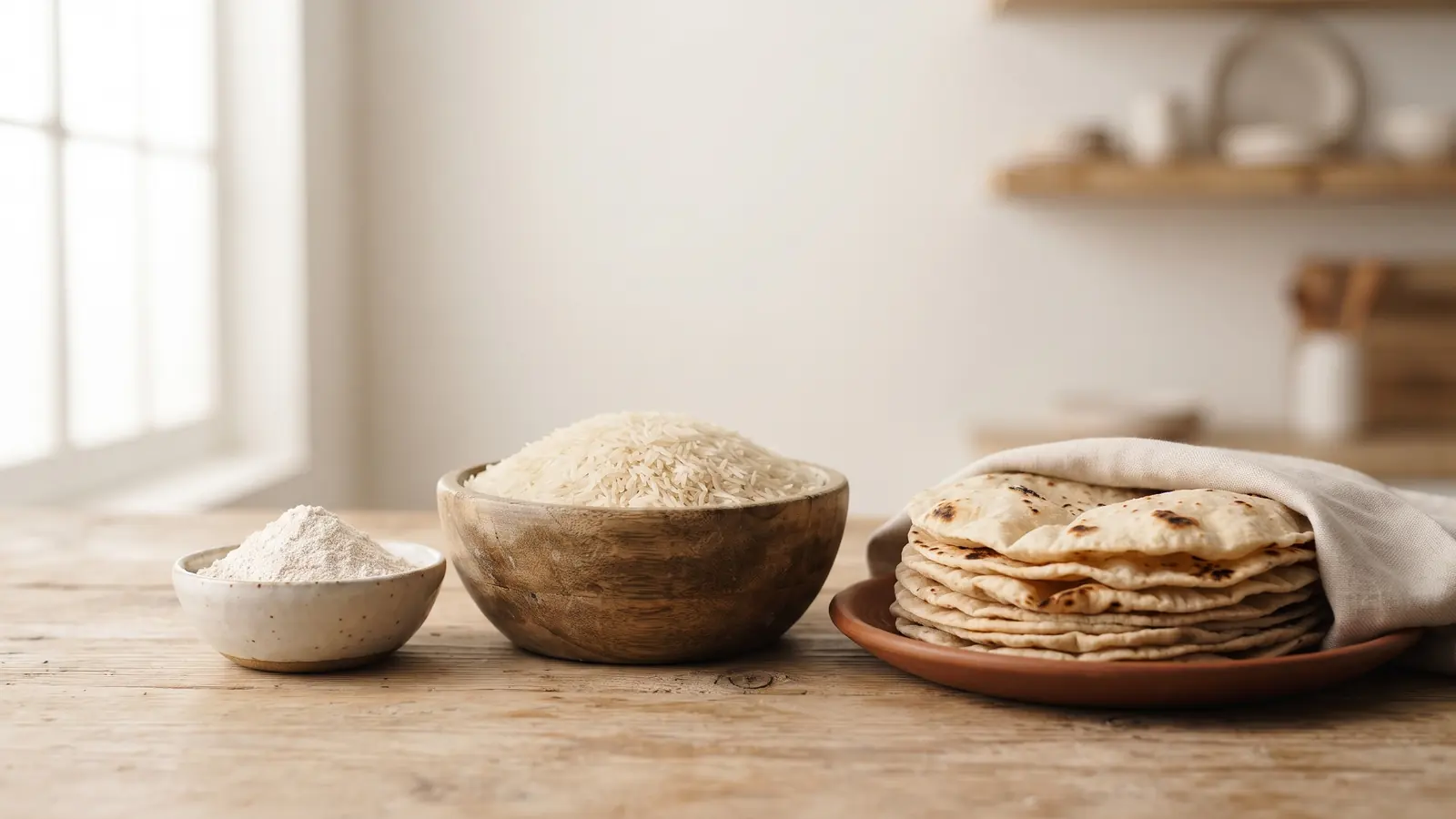
Short answer
The basmati rice to water ratio for the hob is about 1 part rice to 1.5 parts water by volume when the rice has been rinsed and soaked, or up to 1 to 2 for unsoaked rice. Cook covered on low heat for 10 to 12 minutes, then rest off the heat.
The basmati rice to water ratio for the hob is about 1 part rice to 1.5 parts water by volume when the rice has been rinsed and soaked, and up to 1 to 2 for rice that has not been soaked. Bring it to the boil, cover, cook gently for about 10 to 12 minutes, then rest it off the heat.
What is the basmati rice to water ratio?
The basmati rice to water ratio is the amount of water you cook with compared to the amount of dry rice, measured in the same cup or jug. For soaked basmati it is roughly 1 to 1.5, and for unsoaked rice it is usually between 1 to 1.75 and 1 to 2.
Use the same measure for both, such as a mug or a 250 ml cup. Soaked grains have already taken up some water, so they need less in the pan. The ratios below work for most white basmati sold in British shops.
| Method | Rice | Water | Time |
|---|---|---|---|
| Soaked 20 to 30 minutes, hob | 1 cup | 1.5 cups | 10 to 12 minutes covered, then rest |
| Not soaked, hob | 1 cup | 1.75 to 2 cups | 12 to 15 minutes covered, then rest |
| Rice cooker, rinsed | 1 cup | 1.25 to 1.5 cups | Per the cooker’s cycle |
| Boiled in plenty of water, then drained | 1 cup | 6 to 8 cups | 6 to 8 minutes, then drain and steam |
These are starting points. Rice varies with brand and age, so note what works in your pan and adjust by a few tablespoons next time.
Do you need to rinse basmati rice?
Yes, rinse basmati rice in cold water until the water runs mostly clear. Rinsing washes off loose surface starch, which is the main cause of sticky, clumped grains. Two or three changes of water usually do the job.
Put the rice in a bowl, cover with cold water, swirl gently with your fingers and tip the water away. Repeat. Handle the grains softly because long basmati grains snap easily when they are rubbed hard.
Should you soak basmati rice before cooking?
Soaking basmati for 20 to 30 minutes helps the long grains cook evenly and stretch further, and it lets you use less water. It is optional, and many cooks skip it for everyday meals when they are short of time.
After soaking, drain the rice well, then use the lower water ratio of about 1 to 1.5. If you skip soaking, give the rice a longer simmer and a little more water. Soaking matters most for dishes such as biryani and pilau, where separate, long grains are the aim.
How do you cook basmati rice on the hob?
To cook basmati rice on the hob, rinse it, add it to a pan with the measured water and a pinch of salt, boil, cover, reduce to the lowest heat and cook for about 10 to 12 minutes without lifting the lid. Then rest the pan off the heat before fluffing.
- Rinse 1 cup of rice until the water runs nearly clear, then soak for 20 to 30 minutes if you have time.
- Drain and put in a pan with 1.5 cups of water and a pinch of salt.
- Bring to a full boil, stir once, then cover with a tight lid.
- Turn the heat down as low as it goes and cook for 10 to 12 minutes.
- Turn off the heat and leave the lid on for 5 to 10 minutes.
- Fluff the grains gently with a fork and serve.
A tight lid is key. If steam escapes, the rice can be dry on top and soft below.
Why does the rice need to rest after cooking?
Resting basmati rice for 5 to 10 minutes lets the last of the steam spread evenly through the pan, so the grains firm up and separate. Fluffing straight away can break soft, hot grains and leave the bottom wet.
Keep the lid on and the pan off the heat. A folded tea towel under the lid catches condensation and stops drips falling back onto the rice. Then use a fork, not a spoon, to lift the grains from the edge to the centre.
What are the most common basmati rice mistakes?
The most common mistakes are skipping the rinse, using too much water, stirring during the simmer, lifting the lid and cooking on a heat that is too high. Each one releases starch, steam or both and spoils the texture.
- Too much water: leads to soft, gluey rice. Measure rather than guess.
- Stirring: breaks grains and releases starch. Stir once at the boil, then leave it.
- High heat: the base can catch before the top cooks. Use the lowest flame.
- Wrong pan: a thin pan with a loose lid loses steam. A heavy pan with a tight lid works best.
- Fluffing too soon: wait for the rest period.
How much rice should you cook per person?
A common serving is about 75 to 100 g of dry basmati per adult as a side dish, which is roughly 85 to 110 ml in a measuring jug. This cooks to about 200 to 250 g of fluffy rice, though appetites and meals vary.
| People | Dry rice (approx.) | Water (soaked rice) |
|---|---|---|
| 1 | 75 to 100 g | About 130 to 160 ml |
| 2 | 150 to 200 g | About 260 to 320 ml |
| 4 | 300 to 400 g | About 520 to 640 ml |
Water figures follow the 1 to 1.5 ratio by volume, converted loosely, so treat them as a guide and check by cup if you can. If you are cooking for a crowd, cook in a wide pan so the rice sits in a shallow layer.
Can you use the same ratio for brown or other rice?
No, brown basmati needs more water, usually about 1 to 2 or 1 to 2.25, and a longer cook of 25 to 30 minutes. Jasmine and plain long grain rice usually take a little less water than basmati, often around 1 to 1.25 or 1 to 1.5.
Always read the instructions on the packet, because they reflect the particular grain and any parboiling. Different rices behave differently, so the ratio for one is not a safe guide for another.
Where can you buy basmati rice in Leicester?
Reviewers of Falcon Cash & Carry on Google Maps name rice among the groceries on its shelves, according to a read on 14 November 2026, and the store is an Indian grocery cash and carry at 82A Syston Street West, Leicester LE1 2JU.
Which brands, grains and pack sizes it holds is not published, and no prices are known. This guide is independent and does not take orders. Use the menu page for the product types the sources mention, and the hours and location page for the address and opening times before you go.
Common questions
Is the water ratio different in a rice cooker?
Often yes. A rice cooker loses little steam, so many models work well at about 1 part rice to 1.25 to 1.5 parts water for rinsed basmati. Check the markings in your cooker’s pot and the manual, since models differ.
How much cooked rice does a cup of dry basmati make?
Basmati roughly doubles in volume, sometimes a little more, so one cup of dry rice gives about two to two and a half cups cooked. A typical adult portion is around 75 to 100 g dry weight.
Should I add salt and oil to the water?
Salt is a matter of taste: a pinch per cup of rice is common. A teaspoon of oil or a knob of butter is optional and helps keep the grains from clumping, but good rinsing matters more.
Why is my basmati sticky or mushy?
Too much water, too little rinsing or stirring during cooking are the usual causes. Rinse until the water runs fairly clear, use the measured ratio, keep the lid on and avoid stirring once the water has boiled.
Can I cook basmati rice in the oven?
Yes. Use a covered ovenproof dish with boiling water at roughly 1 part rice to 1.5 parts water and bake until the water is absorbed. Rest the dish covered for a few minutes before fluffing with a fork.
This page is part of the independent guide to Falcon Cash & Carry, which has the address, hours and menu.
This article is general information from an independent guide, not from Falcon Cash & Carry itself. For the store’s current details see hours and location.